The United States remains the world's largest and most attractive B2B market. For many European companies, success in America represents a defining milestone. It validates the business, opens access to larger customers, and creates opportunities that can be difficult to replicate elsewhere.
Yet despite having strong products, proven expertise, and successful operations across Europe, many companies struggle to gain traction in the U.S.
The problem is rarely the product.
More often, it is a mismatch between how the company approaches sales and marketing in Europe versus how buyers behave in the United States.
Many executives assume that because they have succeeded in Germany, the Netherlands, Sweden, France, or the UK, the same approach will naturally work across the Atlantic. Unfortunately, the U.S. market tends to punish that assumption.
American buyers evaluate providers differently. Competitive dynamics are different. Expectations around communication, trust, responsiveness, and thought leadership are different.
This article outlines a practical playbook for European B2B companies that want to enter or scale in the U.S. market and avoid some of the most common mistakes.
One of the biggest misconceptions is that the United States is simply a larger version of Europe.
It isn't.
The U.S. is its own business ecosystem with its own buying culture.
A European manufacturer might successfully generate opportunities through trade associations, referrals, distributors, and long-established relationships. Those channels certainly exist in America, but they are often not enough on their own.
U.S. buyers tend to be:
Many overseas-headquartered companies underestimate just how much research happens before a prospect ever fills out a form or schedules a meeting.
By the time a prospect reaches out, they may have already:
If they do not find sufficient information, they often move on without ever contacting you.
Many companies treat marketing as something that happens after they establish a U.S. presence.
The thinking often sounds like this:
"Let's hire a salesperson first. Once sales start growing, we'll invest in marketing."
The reality is usually the opposite.
Without visibility and trust, even talented salespeople struggle.
Consider what happens when a U.S. prospect receives a call from an unfamiliar overseas company.
Their first reaction is often to search online.
What do they find?
If so, the sales process becomes significantly harder.
Marketing should not follow market entry.
Marketing should support market entry from the beginning.
Before investing heavily in campaigns, companies should validate product-market fit.
A product that performs exceptionally well in Europe may not automatically resonate in America.
Questions worth exploring include:
Pain points vary by geography.
What keeps a German operations manager awake at night may differ from what concerns an American operations manager.
European buyers may prioritize engineering excellence.
American buyers may prioritize:
Many companies describe themselves using language that feels compelling internally but means little to prospects.
The best positioning focuses on customer outcomes rather than company capabilities.
Instead of:
"We are a leading provider of advanced integrated solutions."
Try:
"We help manufacturers reduce downtime by 20% through continuous monitoring."
Specific outcomes tend to outperform generic claims.
Trust is one of the biggest barriers facing overseas-headquartered companies entering the U.S.
American buyers often ask themselves:
Companies that proactively answer these questions gain a significant advantage.
Trust-building assets include:
Case studies remain among the most powerful sales tools available.
Whenever possible, highlight:
Educational content demonstrates expertise.
Topics might include:
The goal is not to sell.
The goal is to become a trusted source of information.
Even if you are headquartered in Europe, prospects want evidence that you take America seriously.
Examples include:
Many executives still view content as a branding exercise.
In reality, content is often a sales acceleration tool.
Think about how buyers behave today.
Before scheduling a meeting, they search questions such as:
If your company answers those questions first, you often earn consideration before competitors even enter the conversation.
This concept is especially important for companies without significant name recognition in America.
Content can help level the playing field.
A company with 100 employees can sometimes outperform a competitor with 10,000 employees simply by being more helpful online.
For many European executives, LinkedIn remains an underutilized platform.
In the United States, LinkedIn plays a much larger role in B2B buying decisions.
Prospects routinely evaluate:
An inactive LinkedIn presence sends a message, even if unintentionally.
It suggests that the company is not engaged in the market.
Effective LinkedIn strategies often include:
Buyers frequently trust people before they trust companies.
When CEOs, Managing Directors, and commercial leaders share insights, engagement often increases.
Sales and technical experts can become powerful ambassadors.
Their content often feels more authentic than corporate messaging.
Consistency matters more than perfection.
One thoughtful post per week is often more valuable than a burst of activity followed by silence.
This statement may sound controversial.
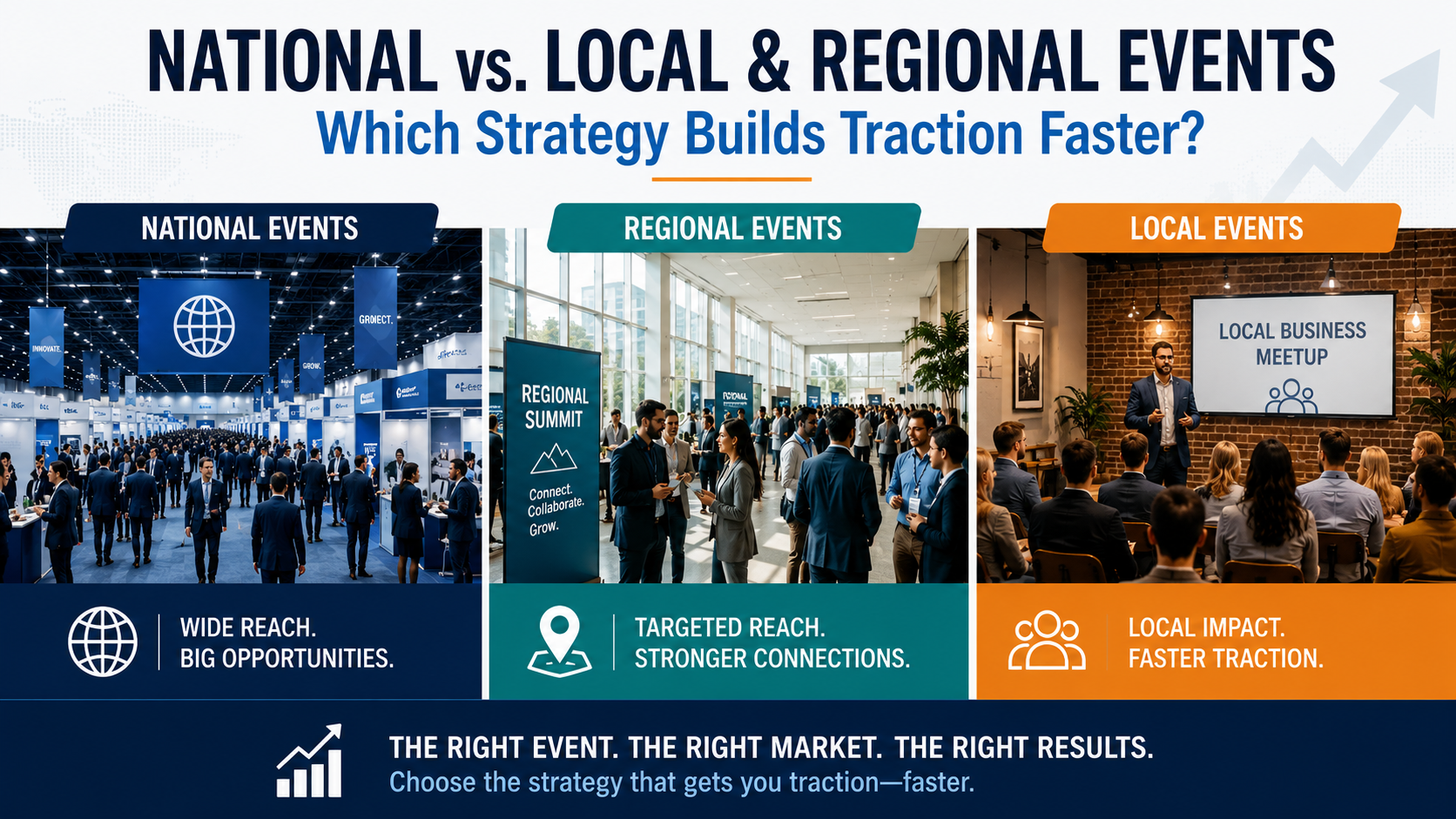
Trade shows absolutely have value.
However, many overseas companies rely too heavily on them.
A common pattern looks like this:
The problem is not the trade show.
The problem is the lack of supporting infrastructure.
Successful exhibitors typically combine events with:
The event becomes part of a broader growth strategy rather than the strategy itself.
One of the most expensive mistakes companies make is allowing marketing and sales to operate independently.
Marketing generates awareness.
Sales converts interest into revenue.
Neither function succeeds consistently without the other.
Before entering the U.S. market, leadership teams should establish:
What qualifies as a genuine opportunity?
Without agreement, friction emerges quickly.
When does marketing hand a prospect to sales?
Who owns follow-up?
How quickly should outreach occur?
Rather than focusing only on traffic or lead volume, consider:
These metrics align both teams around business outcomes.
Many European companies underestimate the time required to establish traction.
The U.S. market can move quickly once trust is established.
Getting to that point takes time.
Particularly in manufacturing, industrial, medical device, and technical sectors, sales cycles often extend for months.
Sometimes longer.
That means leadership should evaluate success using leading indicators, not just closed revenue.
Examples include:
These indicators often appear long before revenue materializes.
America is enormous.
Trying to target everyone usually results in targeting no one.
The most successful market entry programs often begin with a narrow focus.
Instead of:
"We serve all manufacturers."
Consider:
"We help orthopedic device manufacturers reduce production bottlenecks."
Or:
"We help wire harness manufacturers improve quality and throughput."
Specificity creates clarity.
Clarity improves relevance.
Relevance improves conversion.
Once traction develops, expansion becomes easier.
Companies frequently spend significant money on sales and marketing while investing very little in understanding the market itself.
Market intelligence should include:
This information often reveals opportunities that would otherwise remain invisible.
It also helps leadership avoid making decisions based solely on assumptions formed in Europe.
Campaigns come and go.
Growth engines compound.
A sustainable U.S. market strategy typically combines:
Educational resources that attract buyers.
Ensuring prospects can find you.
Building awareness and credibility.
Maintaining engagement over long buying cycles.
Creating direct conversations with qualified prospects.
Providing evidence that your solution works.
Together, these components create momentum.
Over time, the system becomes stronger because every asset reinforces the others.
After working with overseas-headquartered companies pursuing U.S. growth, a consistent pattern emerges.
The companies that succeed rarely have the biggest budgets.
They rarely have the largest teams.
Instead, they tend to do a few things exceptionally well:
Most importantly, they recognize that entering the U.S. market is not simply a sales initiative.
It is a trust-building exercise at scale.
The U.S. market offers enormous opportunity for European B2B companies. It also presents challenges that many organizations underestimate.
Success rarely comes from simply replicating what worked in Europe.
American buyers have different expectations, different information sources, and different buying behaviors.
Companies that understand these differences and adapt accordingly can create significant competitive advantages.
Those that invest early in positioning, trust, content, visibility, and alignment between marketing & sales often find themselves generating stronger results with less friction.
The goal is not simply to enter the U.S. market.
The goal is to build a repeatable growth engine that continues producing opportunities long after the initial launch.
Ready to assess your U.S. growth potential? Beyond Borders Marketing helps overseas-headquartered B2B companies develop practical sales, marketing, and lead generation strategies that create traction in the American market. Whether you're planning your first U.S. expansion or looking to accelerate an existing U.S. presence, we can help identify opportunities, uncover blind spots, and build a growth plan that fits your business.


We use cookies to enhance your experience, analyze traffic, and support our marketing efforts. Privacy Policy