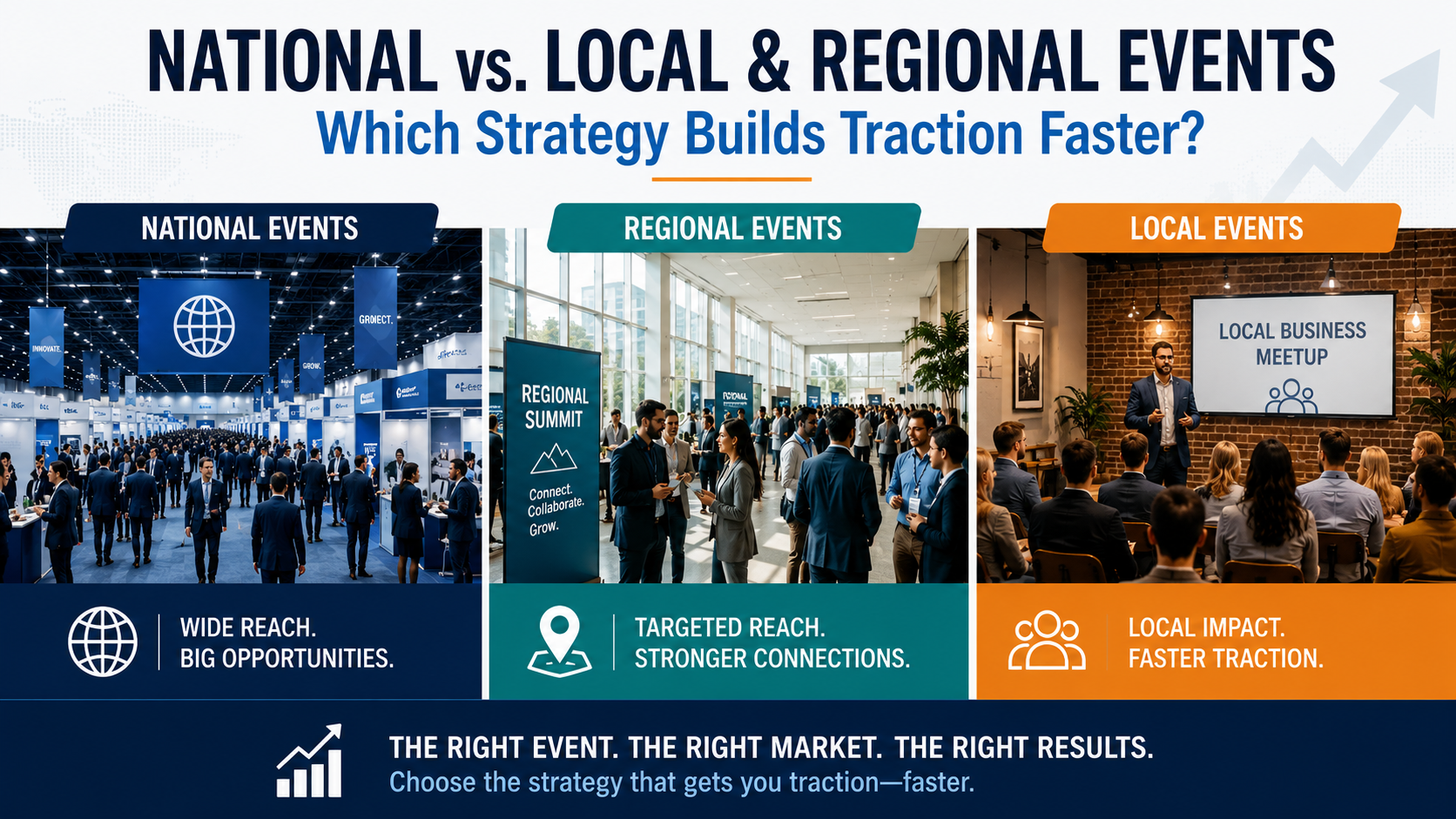
Many overseas-headquartered B2B companies assume that a successful track record in Europe, Asia, Australia, or Latin America will naturally translate into credibility in the United States.
It rarely works that way.
The U.S. is the largest and most competitive B2B market in the world. Buyers have countless alternatives. They receive hundreds of marketing messages every week. They attend multiple trade shows, participate in industry associations and have access to more information than ever before.
As a result, trust becomes the deciding factor.
A company may have excellent products, decades of experience and an impressive customer list overseas. Yet American buyers may still view them as an unknown player.
That disconnect creates one of the biggest challenges international companies face when expanding into the United States: the authority gap.
The authority gap is the difference between how established your company is globally and how established you appear to American buyers.
Companies that close this gap grow faster.
Companies that ignore it often struggle for years despite having strong products and capable sales teams.
Many companies focus first on generating awareness.
They invest in advertising, attend trade shows and launch email campaigns.
Awareness matters. But awareness alone does not create trust.
A prospect might know your company exists yet still hesitate to engage because they are asking questions such as:
Authority answers those questions before they are asked.
The strongest brands do not simply attract attention. They become recognized experts within their category.
When buyers perceive expertise, sales conversations become easier, shorter and more productive.
Many overseas companies underestimate how much risk influences American buying decisions.
This is especially true in industries such as:
A poor decision can cost a buyer millions of dollars, delay production schedules or impact customer relationships.
As a result, buyers often choose the provider they trust most, not necessarily the one with the lowest price or the best technical specifications.
Authority reduces perceived risk.
When prospects repeatedly see your company educating the market, speaking at events, publishing useful insights and demonstrating expertise, they become more comfortable moving forward.
Trust compounds over time.
Many international companies create marketing that focuses heavily on themselves:
While these elements have value, they are not what prospects care about most.
Buyers care about their own problems.
They want answers to questions such as:
Authority is built when you become the company that consistently answers those questions.
One of the most common misconceptions is that superior products automatically generate market traction.
Unfortunately, markets do not reward the best product.
They reward the best-known trusted solution.
Many excellent international companies remain relatively invisible because they invest heavily in engineering and operations while underinvesting in visibility and education.
The reality is simple:
If prospects do not know you exist, they cannot buy from you.
Another mistake is creating content that sounds identical to everyone else.
Examples include articles such as:
These topics are broad and forgettable.
Authority comes from specificity.
Instead of discussing general trends, address the exact questions your buyers are already asking.
For example:
Specificity demonstrates expertise.
Generic content demonstrates participation.
There is a significant difference.
Companies that successfully build authority in the U.S. market tend to focus on four core areas.
Thought leadership is often misunderstood.
It is not about sharing opinions.
It is about helping buyers make better decisions.
The most effective thought leadership content:
For overseas companies, thought leadership can be one of the fastest ways to build credibility.
Unlike advertising, expertise cannot easily be copied.
A company that consistently educates its market becomes associated with knowledge and trust.
American buyers want evidence.
They want proof that others have already trusted you.
This includes:
Whenever possible, highlight outcomes rather than activities.
For example:
Instead of saying:
"We helped a manufacturer establish operations in North America."
Say:
"We helped a manufacturer reduce lead times by 40% while serving U.S. customers more effectively."
Results create credibility.
Authority does not exist in isolation.
People must encounter your expertise repeatedly.
This means showing up where your audience already spends time:
One appearance rarely changes perception.
Repeated visibility creates familiarity.
Familiarity creates trust.
Trust creates opportunities.
Human beings continue to follow the same predictable patterns despite having access to artificial intelligence, predictive analytics and enough data to overwhelm a small nation.
This is where many overseas companies struggle.
They often communicate from a global perspective while buyers evaluate opportunities from a local perspective.
U.S. prospects want to know:
Companies that tailor their content, examples and customer stories to U.S. audiences build authority much faster than those relying solely on global messaging.
When buyers research your company, they leave clues.
They visit your website.
They review LinkedIn profiles.
They search Google.
They read articles.
They evaluate expertise.
Every piece of content becomes part of your reputation.
This means content serves multiple purposes simultaneously:
Buyers gain confidence when they understand their options.
Consistent insights demonstrate expertise.
Prospects often consume content long before speaking with sales.
Quality content increases discoverability through search engines, social media and AI-driven search experiences.
Companies that consistently publish useful content often experience a compounding effect where authority grows month after month.
Many executives believe AI will make authority less important because information is becoming easier to access.
The opposite is happening.
As content volume increases, trust becomes more valuable.
Anyone can generate content.
Fewer companies can generate credible insights backed by real-world experience.
AI has lowered the barrier to creating content.
It has not lowered the barrier to earning trust.
In fact, buyers are becoming more selective.
They increasingly seek:
Authority becomes the filter that helps buyers separate genuine expertise from noise.
And there is plenty of noise. Humanity appears determined to produce it at industrial scale.
Many leaders expect quick results.
Authority rarely works on quarterly timelines.
The strongest companies think in years rather than months.
Typically:
Authority behaves like compound interest.
Small, consistent actions create disproportionate long-term outcomes.
If your organization is entering or expanding in the U.S., focus on these priorities:
Document the most common questions prospects ask sales teams.
These questions should become your content roadmap.
Focus on helping buyers make informed decisions.
Avoid promotional content whenever possible.
Highlight measurable outcomes and real-world examples.
Encourage leaders to share expertise through:
People trust people before they trust companies.
Authority is built through repetition.
One article will not change market perception.
One webinar will not establish expertise.
Consistency wins.
The companies that win in the U.S. market are not always the largest, oldest or best-funded.
They are often the companies that become trusted authorities within their niche.
For overseas-headquartered B2B companies, authority is not a marketing luxury.
It is a growth strategy.
When buyers trust your expertise, opportunities increase. Sales cycles become more efficient. Competitive pressure decreases. Market traction accelerates.
The companies that struggle are usually trying to sell before they have earned trust.
The companies that succeed invest in trust first.
In the long run, authority becomes one of the most valuable assets a company can build.
And unlike products, pricing models or marketing tactics, it is far more difficult for competitors to copy.


We use cookies to enhance your experience, analyze traffic, and support our marketing efforts. Privacy Policy