Bill Kenney is the Founder of MEET, where he helps international B2B and B2G companies scale in the U.S. through strategic trade shows, events, and meaningful connections. Since 2012, Bill has guided overseas-based businesses through the complexities of American market expansion, using his hands-on event expertise to turn trade show participation into measurable growth. We’re proud to feature Bill as one of our trusted partners supporting international companies on their U.S. growth journey.
Welcome to this focused article on one of the biggest opportunities for growth in 2026: strategy. While trade show success depends on strong preparation and meaningful analytics, it all starts with a clear, high-impact plan. In this article, we’re zeroing in on strategy, the foundation that determines whether your trade show investment becomes a cost center or a true growth driver.
Why Strategy Matters
A new year demands a fresh look at how you approach trade shows and events. Start by asking three critical questions:
Too often, B2B and B2G companies get complacent, ending up at the wrong events with outdated strategies. This wastes valuable resources and compromises growth. Your presence on the show floor should reflect your business objectives, not simply consume your marketing budget.
When executed with intention, trade shows become powerful accelerators that fill your pipeline with qualified prospects, deepen account relationships, and position your brand as an industry leader. The difference between success and mediocrity lies in planning. Companies with deliberate strategies consistently outperform those that simply “show up.”
Here’s how to build a high-impact annual trade show strategy that delivers measurable results.
Strategy begins with clarity. What do you want to achieve this year? Are you focused on generating net-new leads, nurturing existing relationships, launching a product, or recruiting channel partners? Avoid vague aspirations like “increase brand awareness.” Instead, establish specific, measurable outcomes tied directly to revenue growth—think “generate 200 qualified leads” or “close three enterprise deals influenced by trade show interactions.”
Well-defined goals ensure every decision you make, from event selection to booth design to staffing, serves a clear purpose. They transform your trade show calendar from a collection of dates into a coordinated growth engine.
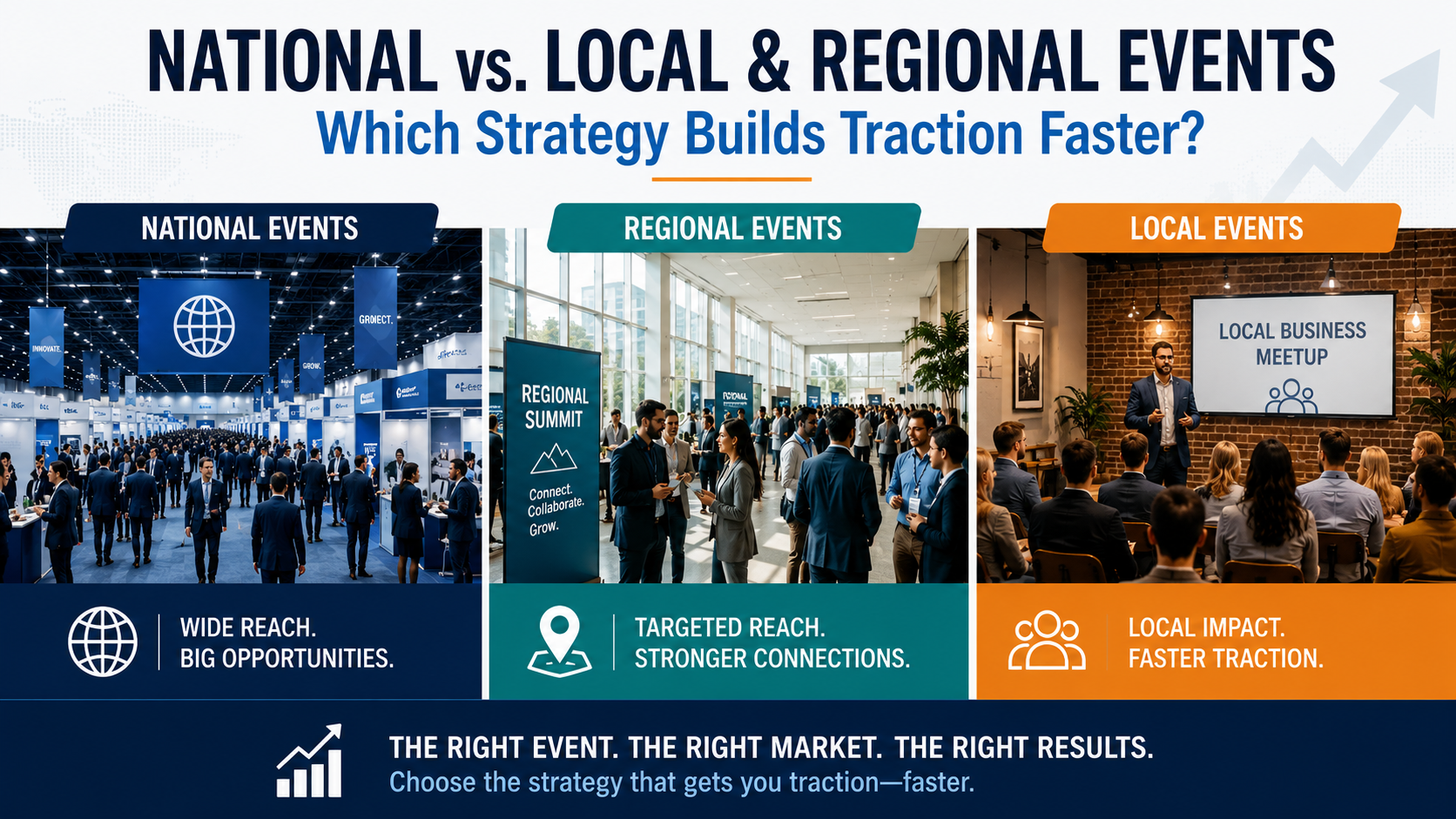
Not every trade show deserves your investment. With dozens of industry events competing for attention, selectivity is essential. Evaluate each opportunity through multiple lenses: audience composition, market reach, competitor presence, speaking opportunities, cost, and historical ROI.
A focused portfolio of five high-impact events typically outperforms a scattered approach across ten mediocre ones. Quality outperforms quantity. Consider whether each show delivers access to decision-makers in your target accounts, whether the timing aligns with your sales cycle, and whether the event’s reputation matches your brand positioning.
The trade show floor is just one touchpoint in a longer engagement sequence. Strategic exhibitors think holistically about the entire customer journey. Before the event, implement targeted outreach campaigns that drive booth traffic and schedule meetings. During the show, create memorable experiences that attract your prospects and differentiate your brand.
Post-show follow-up is where many companies falter. Develop a systematic approach to nurture every connection made, from immediate thank-you emails to personalized content sequences. The best trade show strategies ensure no lead goes cold and every conversation advances toward a business outcome.
Your budget reflects your priorities. Rather than defaulting to last year’s allocation, align spending with your strategic goals. If thought leadership is your aim, invest in speaking opportunities and content marketing. If quality lead generation drives your strategy, allocate resources toward booth traffic-building campaigns and lead capture technology.
Consider the full spectrum of investment opportunities: exhibit design and production, pre-show marketing, booth staffing, hospitality events, digital amplification, and post-show nurture campaigns. Every dollar should connect directly to your defined objectives.
Treat your annual strategy as a living document, not a rigid plan. Schedule periodic reviews to assess performance against goals. Which shows delivered the strongest ROI? Where did you see unexpected opportunities? Use these insights to reallocate resources toward what’s working and eliminate what isn’t.
Agility separates high-performing trade show programs from stagnant ones. Market conditions shift, competitor strategies evolve, and new events emerge. Your strategy should adapt accordingly.
An intentional trade show strategy transforms events from expenses into growth accelerators. With the right plan, every handshake and connection contributes to your company’s success in 2026.


We use cookies to enhance your experience, analyze traffic, and support our marketing efforts. Privacy Policy